

Published: By Trucell7 min read
RANZCR NZ ASM 2025: what Voyager Imaging actually does behind the scenes
Voyager Imaging at RANZCR NZ ASM 2025: PACS, RIS, teleradiology, cloud, AI, portals and data migration, and how Trucell delivers each for NZ radiology.
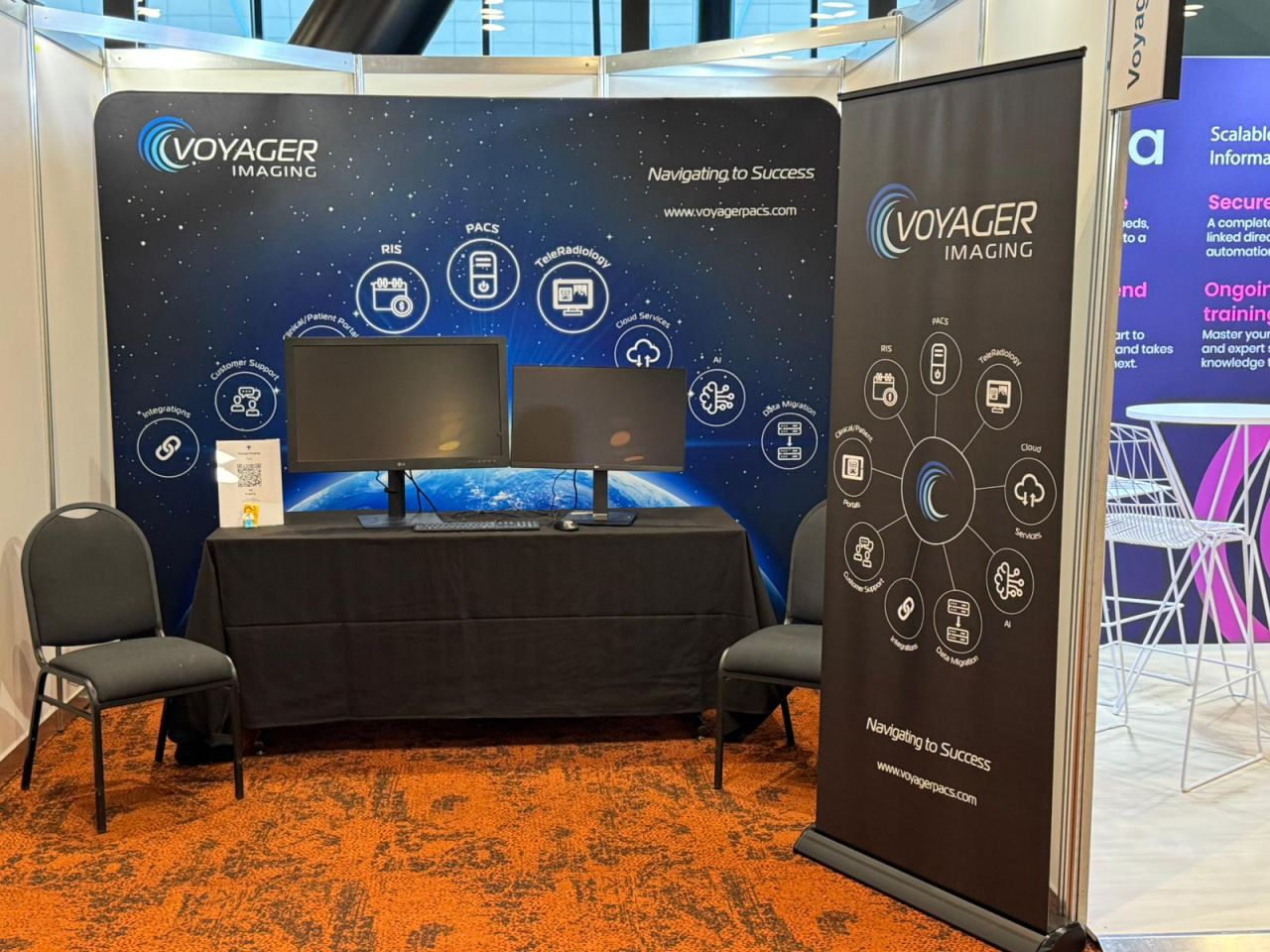
Voyager Imaging exhibited at the RANZCR New Zealand Annual Scientific Meeting 2025 in mid-August, with the booth theme “What we do in the shadows: bringing radiology’s innovations to light”. The point of the line was not the joke: it was that most of the technology that holds a radiology practice together runs quietly behind the curtain. PACS, RIS, teleradiology routing, integrations, AI hand-offs, data migration, patient portals, CD and DVD burning. None of it is glamorous. All of it has to work.
This article is a short walk-through of what was actually on the stand, what each capability is for, and where Trucell sits in delivering it for New Zealand radiology sites, whether you are running a single clinic in Auckland, a regional group across the North Island, or a national network with a Whangaparaoa-based support footprint.
The stack on the booth, in plain English
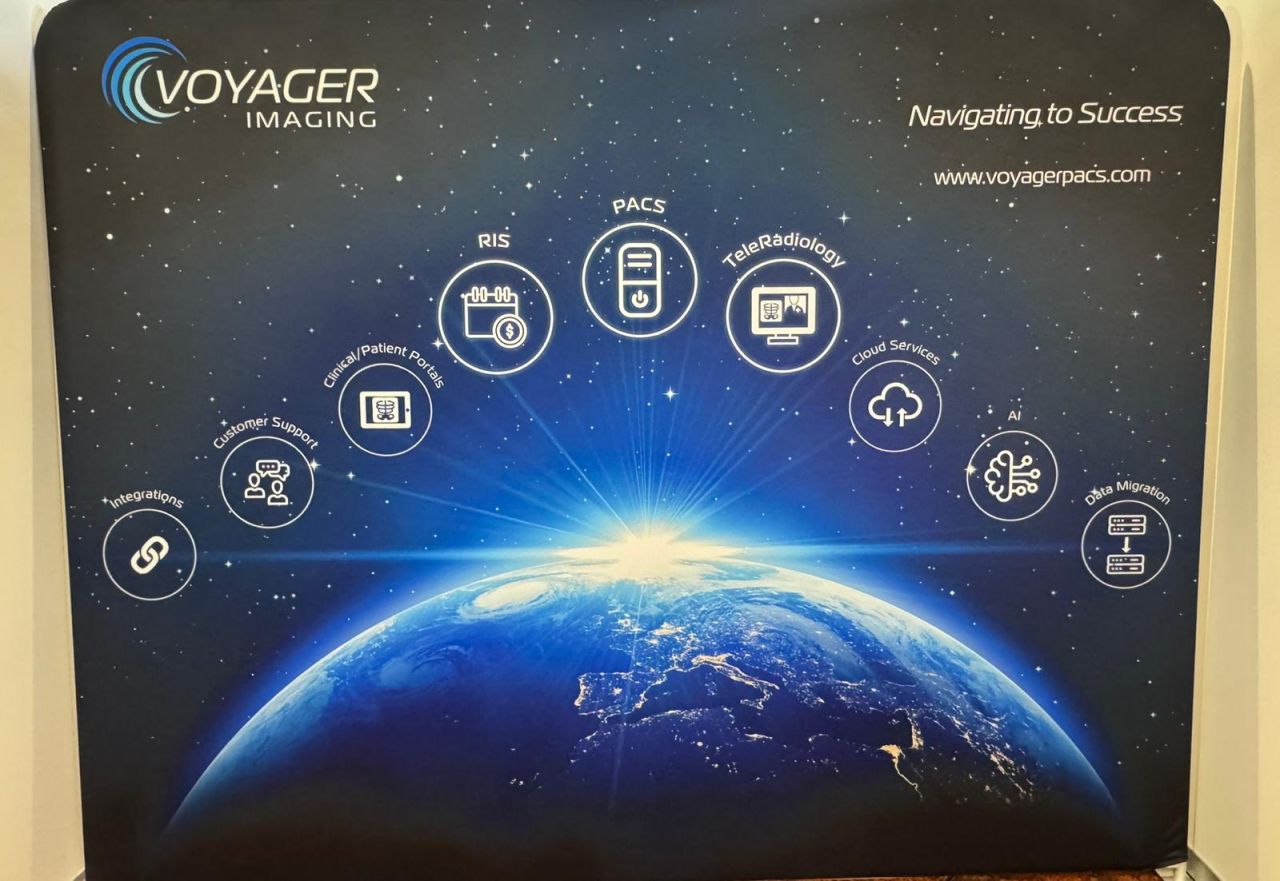
The booth backdrop laid out the Voyager Imaging stack as a single picture. Here is what each capability actually does for you.
PACS: Picture Archiving and Communication System
The clinical image store and viewer. Studies arrive from your modalities, get archived against the patient and study record, and become available to radiologists for reading and to referrers for review. A good PACS keeps prior studies retrievable instantly, handles multi-modality reading, and survives the day a modality vendor pushes a firmware change you did not ask for.
Where Trucell helps: PACS server sizing, storage tiering (hot and cold), DICOM routing rules, viewer rollout to reading rooms and home reporting, and the network and Wi-Fi underneath that determines whether a 1 GB MRI study opens in two seconds or twenty.
RIS: Radiology Information System
The operational system: bookings, worklists, billing, reporting, results delivery, referrer communication. RIS is where the practice runs as a business. The PACS is where the images live.
Where Trucell helps: Voyager RIS deployment, integration to your booking and finance systems, referrer portal setup, and the workflow tuning that makes intake, modality, reporting, and results delivery actually flow on a busy day rather than queue up.
Teleradiology
Reading studies from somewhere other than the site they were captured at. After-hours cover, sub-specialty reporting, multi-site load balancing, and remote-radiologist contracting all sit here. The technical job is moving studies and priors securely to the right reader at the right time, and routing the report back into the source RIS without manual handling.
Where Trucell helps: secure transport, identity and access for external readers, study routing rules that match your sub-specialty and after-hours model, and the audit trail your governance committee will ask for.
Clinical and Patient Portals
Two different audiences. Clinical portals give referrers a way to view images and reports without logging into your full PACS, typically the GP, specialist, or hospital department who needs the study but should not be reading on a diagnostic monitor. Patient portals let patients themselves access their own images and reports under proper consent.
Where Trucell helps: portal hosting, identity (so referrers do not all share one login), branding to match your practice, and integration so a report written in Voyager RIS appears in the right portal automatically.
Cloud Services
Voyager runs both on-premises and in the cloud. The decision is rarely religious: it is about what your network, your modalities, your billing model, and your clinical risk tolerance look like.
Where Trucell helps: an honest cloud-vs-on-prem assessment for your sites, the hybrid models that often make most sense (cloud for archive and DR, on-prem for the working set), and the redundancy design so a cloud outage or an internet outage does not stop reading.
AI
AI in radiology today means decision-support tools that pre-process or pre-analyse studies before the radiologist reads them: chest X-ray triage, fracture detection, mammography priority queues, stroke detection, lung nodule measurement, and so on. The Voyager stack hooks AI tools into the PACS so results land in the worklist where the radiologist already works, rather than in a separate window they have to remember to open.
Where Trucell helps: assessing which AI tools actually fit your case mix, integrating them into your worklist rather than bolting them on, and the governance that lets your medical leads explain to a board what the AI is doing and what it is not.
Data Migration
Moving from a legacy PACS or RIS to Voyager (or migrating between hosting models) without losing studies, priors, or report context. This is the unglamorous work that determines whether your first month on the new system feels like a fresh start or a hostage negotiation with your old vendor.
Where Trucell helps: study and report migration plans, parallel-running periods, prior-study reconciliation, and the cutover sequencing that protects current reporting while history moves across.
Integrations
Everything else: HL7 and FHIR feeds to and from hospital systems, modality worklist (MWL), order and result messaging, identity sync, billing system feeds, referrer directory updates, and anything else that needs to know about a patient or a study. This is where Trucell’s Programming and Integration practice does most of its work.
Where Trucell helps: writing and operating the integration layer, on-call support when a hospital changes a feed, and documenting what is wired to what so a future change does not break three downstream systems silently.
Automated CD / DVD Burning
Still required: referring specialists, patients moving practices, medico-legal requests. The job is automating it so reception is not standing at a burner with a stack of jewel cases. DICOMJet from Neologica handles the print-and-burn workflow end to end and Trucell hosts it for several radiology groups via Ripple Networks. See the Crystal Radiology DICOMJet expansion for how a centralised model works in practice across many sites.
Customer Support
The booth listed it as a capability for a reason. A PACS or RIS without responsive support is a contract you regret on day 31. Voyager Imaging’s vendor support sits behind Trucell’s first-line desk for our radiology customers, so a clinical issue at 06:30 on a Monday gets triaged in New Zealand and Australian business hours rather than waiting for a vendor queue in another time zone.
Where Trucell helps: 24/7 first-line for the clinical environment, escalation paths into Voyager that we manage so you do not have to, and a single accountability point for the rest of the IT estate the PACS and RIS depend on.
Why this matters for New Zealand radiology
Voyager Imaging (Intellirad Solutions) is the vendor. Trucell is the partner that delivers, integrates, and runs it. For NZ radiology specifically:
- Locally based support. Trucell has a Whangaparaoa-based Support Tech footprint and operates inside NZ business hours, with after-hours cover for clinical-priority issues. You are not waiting on a queue offshore for a study that is sitting unread.
- Cloud or on-premises, with NZ data residency considered. We will scope where studies, reports, and identity should live based on your governance and your network, not a vendor default.
- Integration with the rest of your stack. RIS and PACS are usually the two biggest systems in a radiology practice but they are not the only ones. Voice (3CX), networking (Fortinet), endpoint hardware (HP, Lenovo), diagnostic monitors (LG, EIZO), backup, and identity all have to hold together. Trucell scopes all of it.
- Migrations done with the lights on. Most of the radiology groups we work with did not start on Voyager. They moved. We have done that migration with prior reconciliation, parallel running, and cutover sequencing protecting live reporting throughout.
Reading list: related work we have shipped
If you want to see what some of these pieces look like in production rather than on a booth backdrop:
- Centralised DICOMJet for Crystal Radiology Group: the automated CD / DVD burning capability, hosted in our data centre via Ripple Networks, supporting many sites.
- Full IT infrastructure fit-out for Baulkham Hills Radiology: Voyager RIS / PACS, HP clinical workstations, Fortinet HA networking, LG diagnostic displays, 3CX voice, and resilient internet on a single live site build.
- Westside Medical Imaging RadForms trial: replacing paper consent and intake with digital forms tied to each study, with PDFs routed back to PACS.
- Fortinet rollout for an Australian radiology group: the network underneath everything else, centralised on FortiManager / FortiAnalyzer.
If you missed the booth
If you did not get to RANZCR NZ ASM 2025 in person and you want to walk through any of these capabilities for your sites, contact Trucell#landing_page=%2Fblog%2Fvoyager-imaging-ranzcr-nz-asm-2025%2F with your country, sites, and current PACS / RIS situation. We will route the reply to the practice lead who actually delivers Voyager work, not a generic inbox.
For the full Trucell view on radiology IT, see PACS and RIS.