

Published: By Trucell7 min read
Specialise into the problem that keeps pulling you back: Trucell CEO Jason Mead at a UTas fireside chat
Trucell CEO Jason Mead spoke at a University of Tasmania Sydney fireside chat, giving IT students career advice on specialisation and certifications.
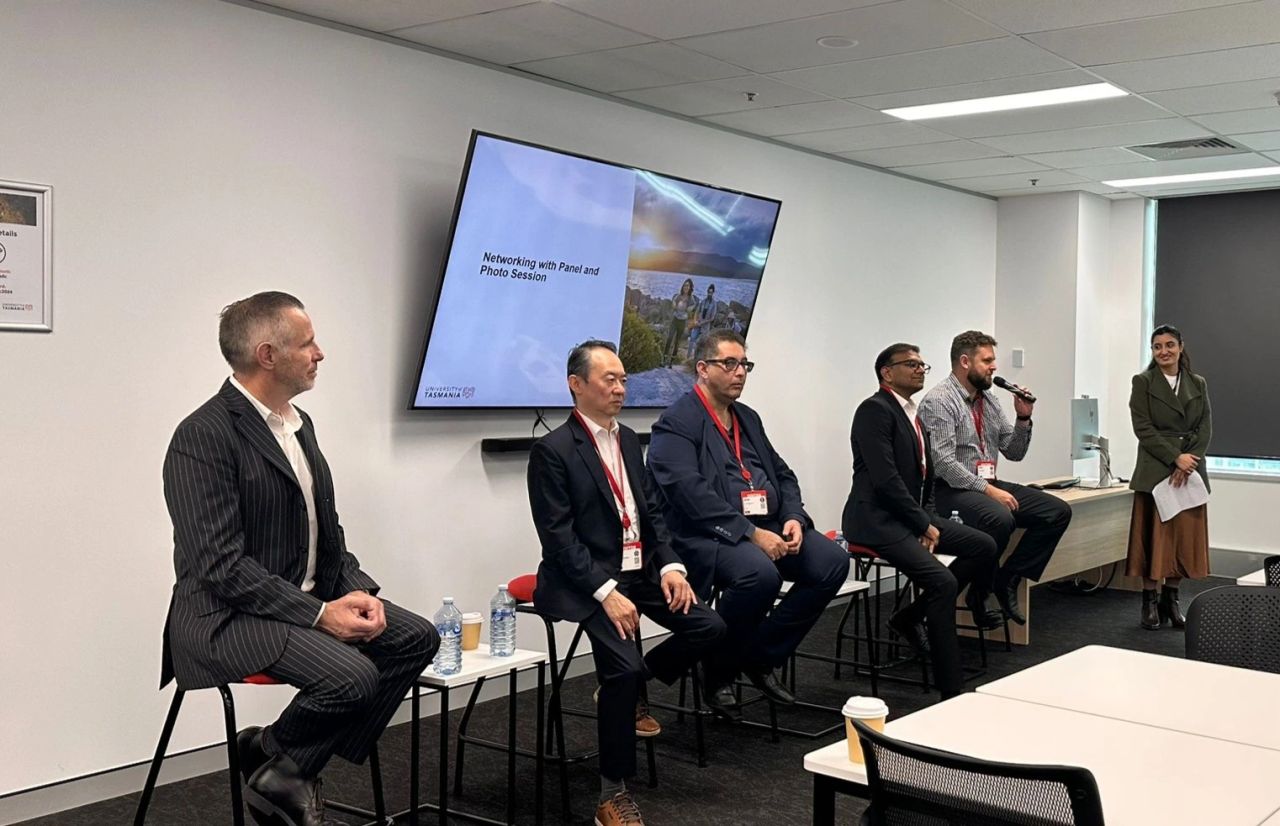
Today our CEO Jason Mead delivered a fireside panel engagement at the University of Tasmania’s Sydney campus in Ultimo, alongside Mark Kennedy, Erwin Soehendra (Business Solution Consulting), John Matthews (iFinance Australia), and Swapnil Singh (Intelligent Financial Solutions). The event was an industry fireside chat for students working through the question every IT and CS student eventually faces: what to do with the degree, and how to become the kind of professional people actually pay for.
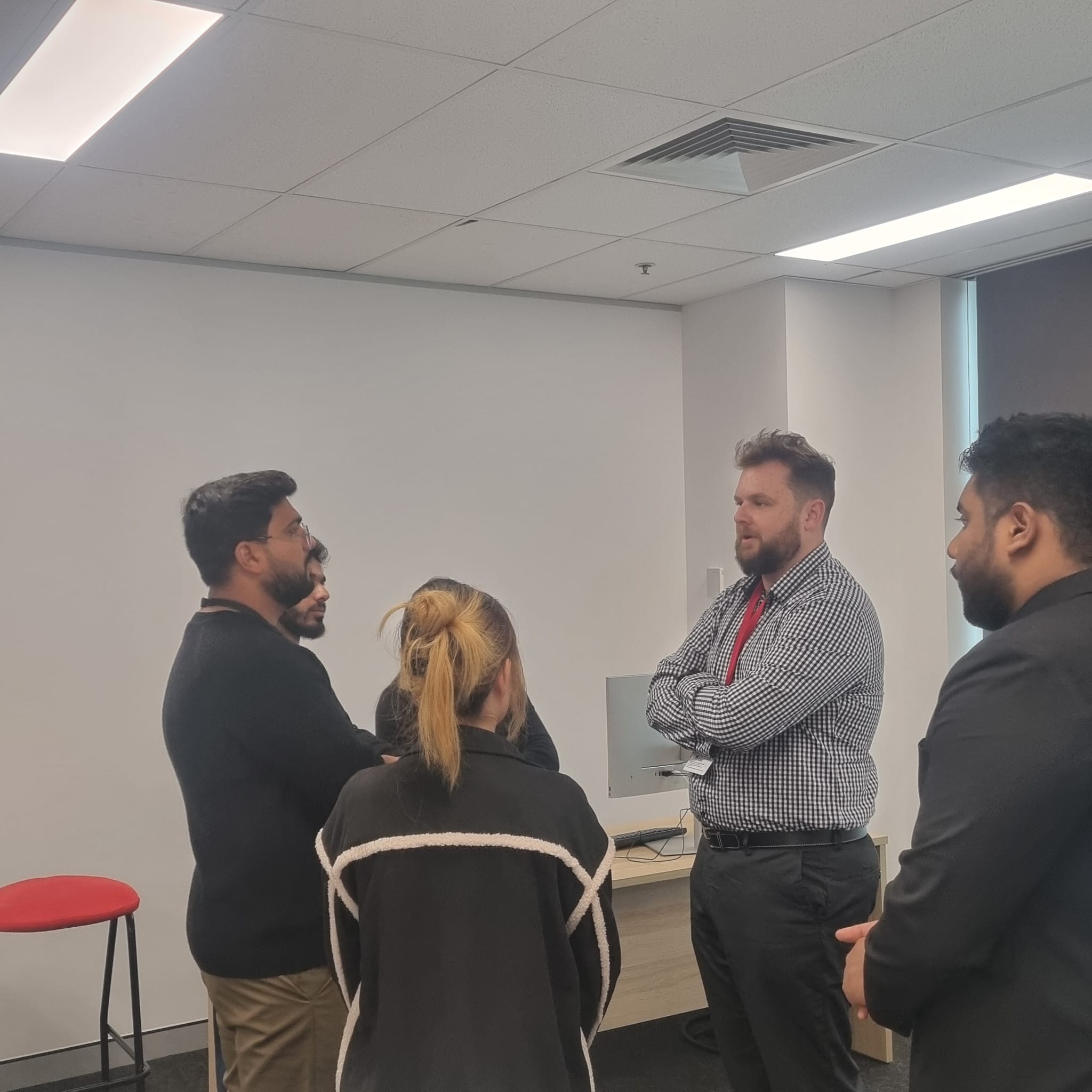
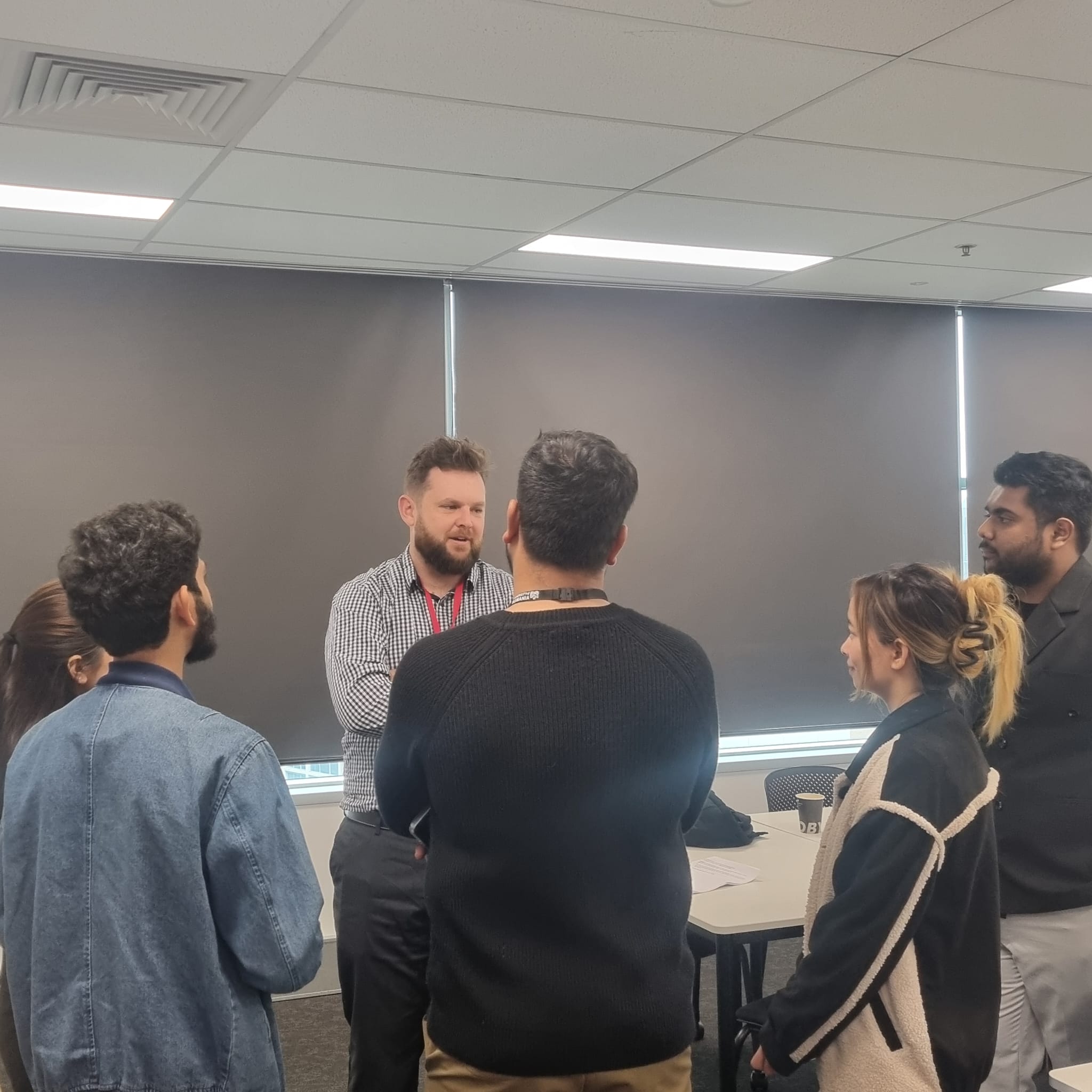
The format was the right one. Five working practitioners, a room of engaged students, and the kind of questions you only get when the people asking are still deciding who they want to become.
The line of Jason’s that the organiser quoted afterwards was this: “Specialise in one area and you can charge what you want for it. Do not fake it until you make it.”
That is too short to be useful on its own. The longer version, captured below, is the part Jason did not have time to fully unpack from the panel chair.
The “fake it until you make it” problem
The advice that floats around career social media, “fake it until you make it”, is the worst kind of half-truth. It is true enough as a confidence frame for showing up to a room you do not yet feel ready for. It fails as a long-term strategy for charging premium rates over a twenty-year career.
The reason is simple. People pay specialists. They tolerate generalists.
If a young professional spends the early career performing competence rather than building it, the floor of their earning capacity is the same as everyone else who is also performing. The ceiling is wherever the next generalist’s quote lands. Specialists do not compete on that ceiling. They compete on whether the buyer can find anyone else with the same depth, and the answer is usually no.
This is not abstract. It shows up in the invoice the day a practitioner stops charging by the hour and starts charging by the problem.
The question Jason was not expecting
The students asked something the panel had not prepared for. Several of them, in slightly different words, asked the same thing:
“How do you choose what to specialise in when nothing has clicked yet?”
This is a better question than the one career advice usually answers. The standard answer is “follow your passion”, which is unfalsifiable and useless. Jason’s honest answer was more practical.
The thing you specialise in is rarely the thing you find by introspection. Sitting alone and asking “what is my passion” almost never returns a usable answer at twenty-one. The brain does not produce specialisations from a cold start.
The thing you specialise in is the thing you find by being competent at three or four adjacent things, and noticing which one keeps pulling you back.
This is how it has worked for almost every senior person Trucell has hired or worked alongside. They started broad. They built basic competence in five or six adjacent areas. They paid attention to which problems made them sit up. They specialised into that.
The practical framing Jason offered to students in their second or third year of an IT degree:
- Get good at delivering the basics. Network fundamentals, scripting, one cloud platform, the inside of a Windows environment, basic security hygiene, a database. Be useful across all of them.
- Get certified in at least one of them properly, not as a LinkedIn ornament but to learn the way of thinking that the certification represents.
- Do personal projects in two or three of the adjacent areas. Notice which one you keep coming back to without being prompted.
- Specialise into that. Tell people it is your speciality. Let the rest become supporting context.
The trap students fall into is trying to skip steps one to three and jump straight to four, on the basis that the people they admire seem to have a clear speciality. Those people did the broad work first. They are quietly hiding the breadth that makes the specialisation legible.
Why Jason pushes hard on certifications
Jason made the certification point on the panel, and it is worth expanding here, because the casual reading (“get certified to look serious”) misses the point.
The certifications worth chasing are not the ones that decorate a resume. They are the ones that change how a practitioner thinks about their craft. The work of preparing for a real certification, sitting under the exam discipline, and having external auditors test the understanding is a structured version of being mentored by people whose standards are higher than the candidate’s current habits.
Trucell itself received ISO 27001:2022 information security certification and ISO 9001:2015 quality management certification within forty-eight hours of each other this month. The certificates are nice. The work of preparing for them changed how the Trucell team operates in ways that no internal “strategy day” has ever achieved in twenty years of running the business.
Apply the same test to any certification a student is considering. CCNA, CISSP, AWS, Azure, RHCE, the Microsoft cloud lineup, the Google ones, the security ones. Ask: does preparing for this change how the candidate thinks about their craft, or is it a credential to list? The first kind is worth real money over a career. The second is decoration.
John Matthews’s line, and the one nuance Jason added
John Matthews delivered the line of the night: “Your network is your net worth.”
He is right. The students were taking it down. The one polite nuance Jason added for any student reading this post:
Be useful to your network before you need it.
The relationships that actually compound over a twenty-year career are the ones where someone showed up for someone else’s wins first. The transactional version of networking (“who can introduce me to who”) is observable from a mile away and earns nothing. The compounding version is the one where, five years from now, someone helped on a side project at twenty-three remembers a colleague when they are hiring a department.
Make yourself the kind of person other people remember without effort. Send the introduction nobody asked for. Comment thoughtfully on someone’s post that has six likes. Show up to events like this one and ask better questions than the people next to you. Those are the deposits in the account that pays out over the long arc of a career.
The advice in one paragraph
If the whole panel collapses into a single paragraph for the students who were in the room, this is it:
Start broad. Build basic competence in three or four adjacent areas of IT. Notice which one keeps pulling you back. Earn a certification that teaches you how to think about that area properly. Do real projects in it. Be useful to other people on their problems before you need help with yours. Then specialise into the speciality the work has revealed, and tell people that is what you do. Charge for it accordingly. Do not fake any part of this.
The students asked sharper questions than the panel expected. The fireside chat format worked because the panellists were five different shapes of practitioner and the room let them disagree productively in places. Initiatives like this one are the cheapest investment a university can make in its students’ next decade.
Trucell would like to thank the organiser and her team for the invitation, and the students for the questions that made the event worth showing up to. Jason will be back if invited.
For students or early-career engineers who saw themselves in the framing above and want to do the broad-to-specialist work inside a team that runs on the basics, Trucell hires across managed IT, cloud, security, and healthcare IT delivery. Current and upcoming roles, and how we think about early-career progression, sit on the Trucell careers page.